Three Thai physicians explain what TRT really is, what it isn’t, and how to think about “normal” vs “optimal” testosterone without the bro science.
Medical review status: no named clinician review is shown for this article. Read the medical review policy

Note: this article does not constitute medical advice. If you are considering testosterone replacement therapy you should consult a licensed physician. It's worth noting that TRT is not appropriate for men with: active prostate cancer, severe untreated sleep apnea, high hematocrit or certain cardiovascular instabilityTestosterone Replacement Therapy (TRT) is increasingly sought after by men in Thailand, particularly those aged 40–70. However, despite its growing popularity, TRT is often misunderstood and surrounded by misinformation. There is a growing body of commentary urging men to**rethink testosterone and testosterone therapy**.
To provide clear, evidence-based guidance,Tiger Health teamed up with three leading physicians specializing in men’s health and hormone therapy in Thailand to answer key questions and dispel the myths. Why Thailand? Thailand healthcare is first class. The country already has a significant number of male expats aged 40-70 living there long term and is a growing destination for medical tourism.
This FAQ-style article addresses the most common clinical questions about TRT—covering safety, medical evaluation, realistic outcomes, and common myths—based on real-world medical practice.
Our goal is to presentaccurate, physician-led insight to help readers make informed, responsible decisions about testosterone therapy.

What do you typically catch on a proper TRT workup (labs + symptom review) that DIY guys miss? …and what problems show up most often when they arrive after self-prescribing?
Note: Medical clinics will typically take blood samples before a patient starts TRT, and use that data to calibrate the therapy. Further tests are often taken during the therapy to establish change in baselines and identify any markers out of range. By contrast**"DIY" testosterone** is self-administered by the patient, without blood work.
First is confirming that testosterone is truly***“low”***** — and that symptoms are truly present.**
Men who self-prescribe often see a single low lab value and begin injecting immediately, without confirming symptoms or repeating testing.
So, what is the best way to measure total testosterone?
in the morning (before 11 a.m.), when levels are most accurate
Persistent fatigue
At the clinic, our goal is also to identifywhy** testosterone is low**
Before starting TRT, physicians assess the underlying cause, such as:
Obesity
In many cases, testosterone levels can improve without TRT once these factors are addressed.
Unlike DIY TRT, a good clinic will establish an essential baseline blood test before TRT
This test will typically evaluate:
Men who self-prescribe rarely test comprehensively — problems often appear later as a result.
Some of the common problems seen when men self-inject before seeing a doctor:
When we evaluate someone forTRT, we look at the big picture, not just their lab numbers.
Blood tests are useful, but what really tells us ifTRT is the right path are the symptoms the person is experiencing.
This is the key difference that guys whoDIY their treatment often miss. They might just look at a testosterone number and start self-prescribing. In our clinic, we focus on symptoms like motivation, sex drive, energy, and mood.For us, a drop in motivation and sex drive are the biggest red flags.
We see a lot of issues in men who self-prescribe, like gynecomastia (male breast development) or mood swings, which we can usually fix.
But the biggest problem we see, and one that’s often missed, isandrogen receptor resistance.
What happens is a guy starts using testosterone, feels amazing, and gets great results in the gym. But after using too much for too long, his body stops responding. He gets no more benefits, and it’s a very difficult situation to correct.
This is aserious issue we see often, and it highlights why professional guidance is so important.
Many individuals begin Testosterone Replacement Therapy (TRT) based on peer recommendations, often without clear symptoms or a professional diagnosis.
While some may experience fatigue or diminished sexual health, they frequently bypass essential physical examinations and blood work which we provide here atMenhance Clinic.
Upon clinical evaluation, it is often revealed that their symptoms stem from underlying conditions rather than low testosterone, such as diabetes, anemia, thyroid dysfunction, or vitamin D deficiency.
Furthermore, individuals who self-medicate often present to physicians at a later stage with complications, including testicular atrophy, gynecomastia (enlarged breast tissue), and significant mood swings.
#2. Common Myths about Testosterone and TRT
Let’s talk about the myths. We’ve all seen the Tik Tok and Youtube videos about testosterone for men. The danger is, that while the intentions of many influencers may be good, their medical knowledge isn’t.
Testosterone is not a pre-workout supplement or a performance enhancer.
Testosterone is a primary hormone in the endocrine system, a complex signaling network that regulates everything from metabolism and mood to fertility, cardiovascular function, red blood cell production, bone density, and brain chemistry. When you adjust testosterone, you are not tweaking one variable. You are influencing the whole biological system.
So let’s explode some of those myths first, and get to the truth about testosterone.
##Myth #1: “TRT is the same as using steroids.”
This is one of the most common misunderstandings we encounter. Testosterone Replacement Therapy isnot the same as anabolic steroid use. TRT is a medical treatment designed torestore testosterone to a level that is appropriate and healthy for the individual.
In contrast, steroid use in bodybuilding involves pushing hormone levels far beyond natural physiological ranges. TRT focuses on restoring balance, supporting long-term health, and improving quality of life — not enhancing performance beyond what the body is designed to handle.
##Myth #2: “TRT makes men aggressive or irritable”
Aggression or mood instability is usually not caused by TRT itself, but rather bypoorly managed therapy. In clinical practice, these issues are most often associated with:
When TRT is prescribed appropriately and monitored carefully, many patients actually reportimproved emotional stability, better mood regulation, and a calmer mental state.
##Myth #3: “TRT causes prostate cancer.”
Based on current scientific evidence, TRT hasnot been shown to cause prostate cancer. However, testosterone can stimulate the growth of a prostate condition that already exists but has not yet been detected.
For this reason, proper screening is essential. We always recommend baseline prostate evaluations, including PSA testing, followed by regular monitoring throughout treatment. When managed responsibly, TRT can be both safe and effective.
The belief that TRT causes prostate cancer is a misconception rooted in outdated research. Modern studies have shown no significant link between medically supervised TRT and an increased risk of developing prostate cancer.While men with active prostate cancer should not undergo TRT, testosterone therapy itself is not a direct cause of the disease. As part of safe and responsible treatment, regularPSA monitoring is routinely performed to ensure ongoing prostate health.
##Myth #4: You feel the same strong effect with every injection
The first dose often feels more noticeable because the body is shifting from deficiency to normal levels.
Subsequent doses are designed tomaintain and stabilize hormones, so the effect may feel subtler even though the therapy is working effectively.
##Myth #5: TRT is Only for Older Men
TRT is not only for older men. It is a medical treatment for hypogonadism, a condition that can affect men of any age due to genetic factors, injury, illness, or lifestyle influences.While natural testosterone levels may begin to decline after the age of 30, men in their 20s, 30s, or 40s who have clinically low testosterone accompanied by symptoms can also benefit from appropriately supervised therapy.
#3. Normal vs Optimal Testosterone for Men 40-70
How do you define 'normal' vs 'optimal' testosterone for men 40-70, and what metrics matter most beyond total T (free T, SHBG, symptoms, body comp, sleep, libido, energy)?
Note: There is no single universally accepted definition of “normal” testosterone. Many doctors therefore rely heavily on clinical cases and lived patient outcomes rather than a rigid number. A man at 350 ng/dL may feel completely fine. Another at 550 ng/dL may present with fatigue, low libido, or poor recovery. Context matters.
In general, for men between the ages of 40 and 70, the laboratory-defined**“normal range”** for Total Testosterone typically falls between300 and 1,200 ng/dL.
However, it’s important to understand that**“normal on a lab report does not always mean normal for you as an individual.”** Many men fall within this range and still experience clear symptoms of testosterone deficiency.
What We Consider “Optimal” in Clinical Practice
From a clinical perspective, anoptimal testosterone level is not about chasing a single number, but rather achieving a range where the patient feels, functions, and performs at his best.
In many patients, this tends to be:
-Total Testosterone: approximately750–1,100 ng/dL
-Free Testosterone: in theupper portion of the reference range
-Estradiol: balanced — neither too low nor too high
Metrics That Matter More Than Total Testosterone Alone
Total Testosterone by itself does not give us the full picture. In our practice, we place greater emphasis on several key factors:
-Free Testosterone — this is the biologically active hormone and one of the most important markers
-SHBG — elevated levels can bind testosterone and make it unavailable to the body
-Real clinical symptoms — how the patient actually feels in daily life
-Body composition — muscle mass versus body fat
-Sleep quality
-Libido and erectile quality
-Energy levels, motivation, and mental focus
Ultimately, well-managed TRT is not just about improving lab values.
Good TRT means the numbers look good — and the patient genuinely feels good as well.
This is a fantastic question because it gets to the heart of modern hormone therapy. The difference between**‘normal’ and‘optimal’** is everything.
‘Normal’ testosterone is just a statistical range from a lab for example, 250-950 ng/dL. This range is huge and includes men who feel terrible at the low end and men who feel great. Being**‘normal’ simply means you fall within the average, but it says nothing about your quality of life. You can be‘normal’ **and still have all the classic symptoms of low testosterone.
‘Optimal’ testosterone, on the other hand, is the level where you, as an individual, feel and perform your best. It’s not one number. It’s a personalized state where your symptoms are resolved. You have strong energy, good libido and motivation, you’re sleeping well, and your body composition is healthy. This is our goal in the clinic.
To find that optimal level, we look far beyond just Total Testosterone. As you mentioned, Total T can be misleading. We prioritize:
So, we useFree T to guide us, but we let the patient’s symptoms and overall well-being tell us when we’ve hit their**‘optimal’** zone.
In clinical practice, total testosterone levels generally range between 250–850 ng/dL. Testing should ideally be conducted in the morning, when testosterone levels are at their peak.
According to the Thai Urological Association, a level below 346 ng/dL when accompanied by symptoms such as fatigue, low libido, or erectile dysfunction indicates Testosterone
Deficiency Syndrome (TDS). This is particularly relevant for high-risk groups, including individuals with anemia, diabetes,obesity or chronic liver and kidney disease.
Free testosterone is typically assessed when symptoms persist despite**“normal” **total testosterone levels. For optimal health, a total testosterone level above 450 ng/dL in the absence of clinical symptoms is generally considered ideal.
#4. Testosterone and Mental Health
In your clinical experience, how does low testosterone typically show up mentally (mood, anxiety, irritability, motivation, confidence, brain fog), and what changes do patients most commonly report after optimizing levels - and on what timeline?
Note: there is an increasing body of clinic evidence that shows a correlation between mood and testosterone in men (especially in the context of low testosterone levels). This evidence moves the conversation beyond testosterone therapy being viewed purely as a physical optimization to one that contributes to overall general wellness.
The psychological effects of low testosterone are extremely common, yet they are often overlooked or misunderstood. Many men assume these changes are simply part of aging or stress, when in reality, hormones play a major role.
Common mental and emotional symptoms include:
What Patients Often Notice After Hormone Levels Are Optimized
When testosterone levels are brought back into an appropriate and balanced range, patients frequently report meaningful improvements — not overnight, but in a steady and sustainable way.
Typical timelines reported by patients include:
-More stable mood: within2–4 weeks
-Improved focus and confidence: around4–6 weeks
-Return of motivation and drive: within1–2 months
It’s important to emphasize that this isnot a sudden “high” like a stimulant or addictive substance. Instead, patients describe feeling more like themselves again — calmer, clearer, and more consistent over time.
This is a huge part of our practice. Often, the first signs of low testosterone aren’t physical, they’re mental. In our clinical experience, it typically shows up as a combination of:
Now, to your excellent point, if these symptoms are truly caused by low testosterone, the change after optimization can be profound. It’s not about pushing levels into a**‘superhuman’ **range. Of course, if you go to a superhuman level, almost anyone will feel great for a short time, but that feeling won’t last, and it’s not worth the long-term price you pay in cardiovascular risks and other health complications. Our goal is to bring a man back to his personal, sustainable optimal level. When we do that, the changes patients report are often life-changing :
-The Timeline: The first thing to improve is usuallymotivation and energy, often within thefirst 2-4 weeks.
-Within 1-3 months, most men report that thebrain fog lifts.
-Confidence and mood tend to follow as their energy and mental clarity return.
This approach ensures the benefits are real, sustainable, and safe.
Low testosterone can present through a spectrum of symptoms, including chronic fatigue, irritability, mood instability, low libido, erectile difficulties, and depression. Effective management requires a dual approach: appropriate hormone supplementation combined with meaningful lifestyle modifications, which we can help guide at our men’s health clinic. These include optimizing sleep, maintaining a balanced diet, engaging in regular physical exercise, and supporting overall mental well-being.
#5. Realistic TRT Results
For a typical patient who’s a good candidate, what improvements tend to show up first (libido, mood, energy, training recovery), what takes longer (body composition), and what’s an honest timeframe for each?”
Note: TRT results are highly dependent on the patient, the baseline and dose. In this context, working with a clinical physician offers a significant advantage in that the therapy (testosterone and aligned medication/supplementation) can be calibrated regularly to ensure optimal results.
When patients start TRT, it’s important to understand that improvements happen in stages. Some changes appear relatively quickly, while others require patience and consistency.
Improvements Often Seen First (⏱ 2–6 weeks)
Most patients notice early benefits such as:
These early changes are usually the first signs that hormone levels are moving in the right direction.
Improvements That Take Longer (⏱ 3–6 months or more)
Longer-term physical changes develop more gradually, including:
TRT is not a miracle treatment. Testosterone supports the body, but results remain limited if a patient does not eat well, exercise regularly, and get adequate sleep. When done properly,TRT helps the body respond better to healthy habits — it doesn’t replace them.
Our patients at Menhance Clinic typically report noticeable improvement within 3–6 months, including increased strength,vitality, and mental focus. Emotional stability, energy levels, and sleep quality often improve more rapidly, usually within the first 1–3 weeks, with sexual function and libido following soon after. By the 2–3 month mark, many patients experience increased muscle strength and a reduction in body fat.
It is important to maintain realistic expectations: hormone therapy is not a**“magic pill” **for extreme bodybuilding or total fat loss. Its primary goal is to restore physiological balance and overall well-being, rather than to achieve superhuman performance.
###**Dr.Thanathip Sunthara (Dr. Champ) **
Contact us : https://www.wellthymeclinic.com/
###Dr. Kenika Norrachetdecha – Hormones, Brain & Metabolic Health
Dr. Kenika is the medical brain and heart behind TRT Bangkok.
She combines modern hormone medicine, regenerative therapies and medical weight-loss programs to help men feel like themselves again – physically, mentally and emotionally.
Her key focus areas include:
Dr. Kenika has completed advanced training and certification in hormone-based protocols for traumatic brain injury (TBI) and post-traumatic stress, based on the work of internationally recognised experts in neuroregenerative medicine. She applies this knowledge especially in men with a history of head injuries,accidents or chronic stress – not only to improve lab values, but to support brain health, mood and performance long term.
Patients describe her as calm, precise and deeply committed. When you sit down with her, you feel that she listens, understands the full picture and designs a plan that is both medically solid and realistic for your life.
Contact us : https://www.trtbangkok.com/
A distinguished urologist with over 30 years of experience, Dr. Chai brings exceptional skill and knowledge to our Men’s Clinic. He holds a Doctor of Medicine degree, is certified by the Thai Urological Association, and is a valued member of the American Urological Association. His surgical proficiency is further demonstrated by his credentials as a Siriraj Certified Board of Urology specialist.
At our exclusive Men’s Clinic, Dr. Chai serves not only as a trusted practitioner but also as a leading specialist in male health. We provide a refined environment where expert care meets modern medical science across a focused spectrum of specialized services:
• Erectile dysfunction (ED)
• Peyronie’s disease & penile curvature surgery
• Penile enlargement & cosmetic urology
• Testosterone replacement therapy (TRT)
Experience expert, discreet, and sophisticated care dedicated to men’s optimal health and well-being.
Contact us: https://www.menhanceclinic.com/
These are links included in the article content. They are not presented as a complete or independently verified reference list. Meaningful medical claims should also be checked against primary or authoritative sources.

Healthi-Life Longevity Center on the Hidden Signals of Aging - and Why the Best Time to Take Action Is Before You Feel Anything Is Wrong
AUG 26
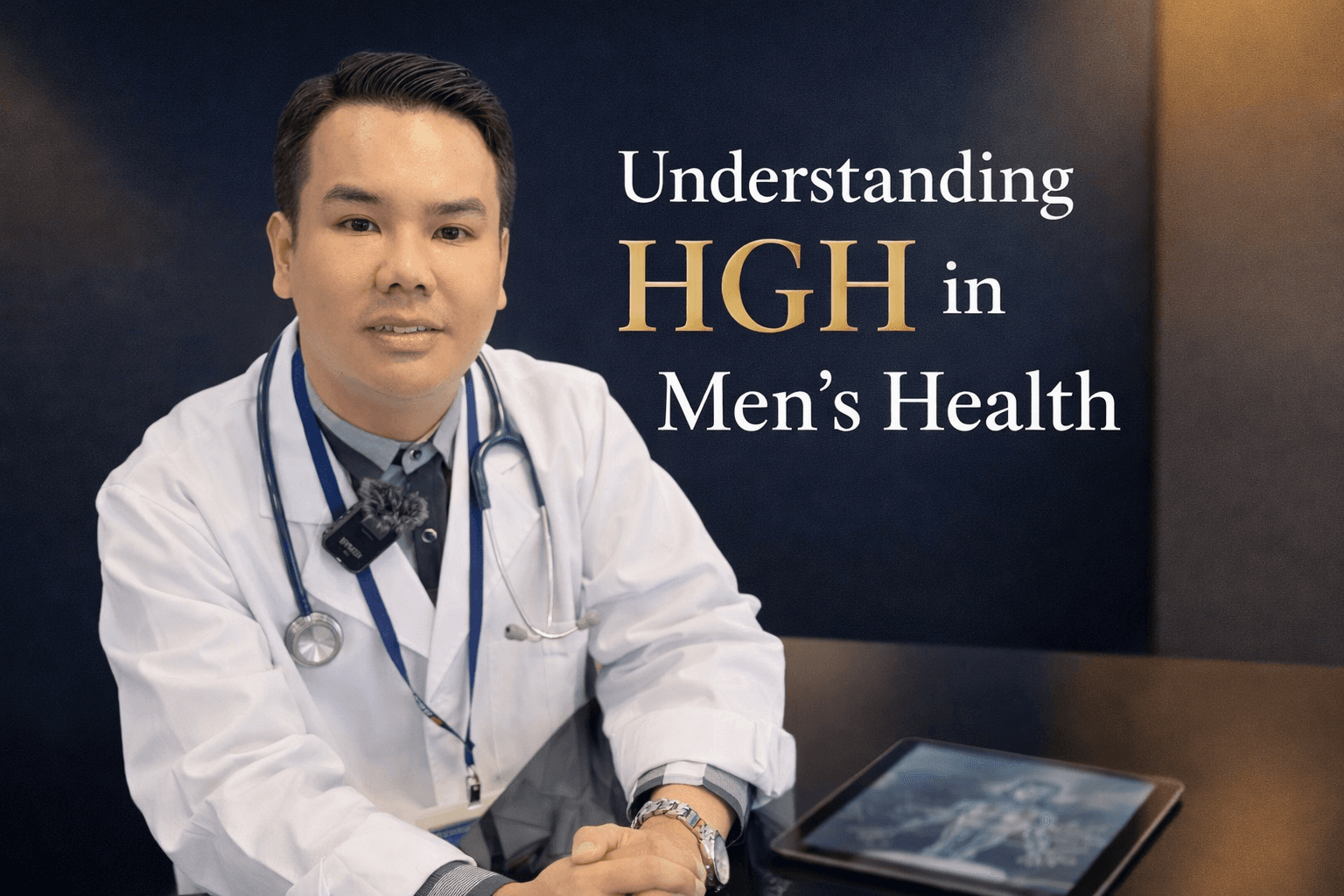
Understanding how these two hormones shape energy, recovery, and overall health - and why it’s not always just testosterone
APR 8

HGH, TRT, peptides, longevity protocols, they all sit on the same moral test: are you using medicine to treat a real constraint, or are you using it to cover lifestyle debt.
JAN 20