
When most people think about hair transplantation, the first questions that come to mind are often, "How many grafts do I need?" or "What percentage of the transplanted hair will grow?" But according to Dr.
Medical review status: no named clinician review is shown for this article. Read the medical review policy
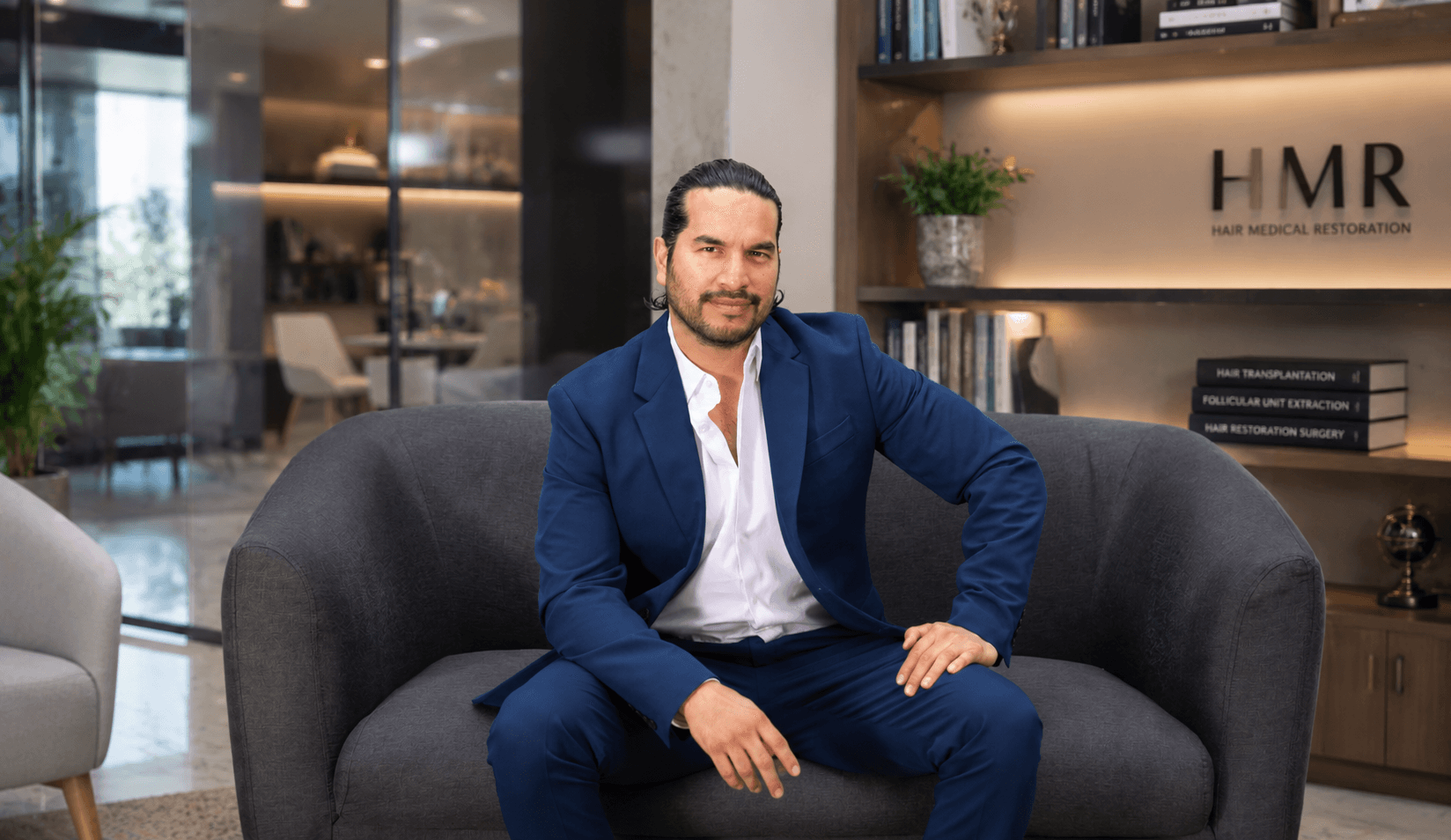
When most people think about hair transplantation, the first questions that come to mind are often, "How many grafts do I need?" or "What percentage of the transplanted hair will grow?"
But according to Dr. Cortez of HMR | Hair Medical Restoration, those may not be the most important questions at all.
The real question, he suggests, "is whether we're planning your hair for the next 10 or 20 years - not just for the next 12 months."
In this interview with Tiger Health, Dr. Cortez shares his perspective on what truly defines quality in hair transplantation, why medical tourism is evolving beyond price, and how artificial intelligence could reshape the future of hair restoration without replacing the surgeon.
One of the biggest misconceptions Dr. Cortez continues to encounter is the belief that a successful hair transplant simply means implanting as many grafts as possible.
In reality, graft count is only one piece of a much larger puzzle.
"Many patients arrive asking how many grafts they need," Dr. Cortez explains. From a medical perspective, however, the goal is to create a natural, sustainable result - not simply to maximize numbers.
This philosophy becomes especially important because donor hair is a finite resource.
Every graft used today is one that cannot be used again in the future. As hair loss continues to progress with age, preserving donor hair becomes just as important as restoring lost hair.
"A great hair transplant shouldn't only look good after 12 months," he says. "It should continue to make sense as the patient gets older."
If graft count isn't the ultimate measure of success, what is?
For Dr. Cortez, quality is defined by a combination of precision, planning, artistry, and medical responsibility.
Every stage of the procedure matters - from graft survival and handling to implantation angle, hairline design, density distribution, and long-term protection of the donor area.
At HMR, another key principle is "physician-led care".
Rather than delegating the critical stages of surgery, Dr. Cortez personally performs the implantation of every graft, while the medical team supports the procedure through graft preparation and surgical assistance under the surgeon's direct supervision.
The goal, he explains, isn't simply to create density.
It's to produce results that are natural, balanced, and medically responsible for years to come.
Mexico has become one of the fastest-growing destinations for international hair transplant patients, particularly those traveling from the United States.
But Dr. Cortez believes the success of medical tourism should not be measured by affordability alone.
"The best medical tourism experience combines accessibility with safety, transparency, and proper follow-up," he says.
Patients should clearly understand who will perform the surgery, which technique will be used, how many grafts are truly appropriate for their individual case, and what level of care they can expect before and after the procedure.
For clinics in destinations like Tijuana, this represents an opportunity to offer not only world-class medical care, but also an organized, seamless experience - from the initial consultation through recovery.
In today's market, trust has become just as valuable as convenience.
Artificial intelligence is rapidly making its way into healthcare, and hair restoration is no exception.
Dr. Cortez believes AI has tremendous potential to improve consultations, treatment planning, and patient education.
Future applications may include analyzing donor density, estimating graft requirements, monitoring hair loss progression, improving before-and-after documentation, and helping physicians develop more personalized treatment plans.
Yet despite these advances, he does not believe technology will replace the human element.
"AI should be viewed as a support tool - not a replacement for the surgeon."
Creating a natural hairline, determining the right density, and responsibly managing a patient's limited donor supply still require medical judgment, ethical decision-making, and artistic vision.
Those are qualities that cannot simply be automated.
Looking ahead, Dr. Cortez believes the future of hair restoration will be defined not by technology alone, but by the combination of smarter tools and stronger medical standards.
AI will undoubtedly make consultations more precise and information more accessible.
But ultimately, the best outcomes will continue to depend on experienced, physician-led care.
Because in the end, a successful hair transplant is not just about restoring hair.
It's about creating results that still look natural many years from now.
Dr. Jorge Keity Cortez Barrón is a board-certified hair transplant surgeon based in Tijuana, Mexico, with more than 15 years of experience specializing in hair restoration for both men and women.
As the founder of HMR | Hair Medical Restoration, Dr. Cortez focuses on delivering natural, long-lasting results using advanced techniques, including Follicular Unit Extraction (FUE) and Direct Hair Implantation (DHI). His treatment philosophy emphasizes personalized planning, physician-led care, and long-term donor management to achieve results tailored to each patient's unique needs.
Committed to continuous professional development, Dr. Cortez has completed postgraduate training in aesthetic medicine and regularly participates in leading international conferences organized by the International Society of Hair Restoration Surgery (ISHRS), the World FUE Institute, and IMCAS, staying at the forefront of innovation in hair restoration.
Today, Dr. Cortez is recognized as one of Mexico's leading hair transplant surgeons, combining technical expertise, artistic hairline design, and evidence-based medical care to help patients achieve natural and sustainable outcomes.
