

The Healthspan Blueprint for Men: Build Strength, Protect Hormones, Upgrade Recovery
If you are a man 40-70, you do not need another “biohack.” You need a blueprint that survives real life: travel, work, stress, inconsistent sleep, social pressure, and the slow drift toward softer bod


Healthspan is the part nobody glamorizes: the decades where you are still strong, sharp, mobile, sexually functional, and independent, not just technically alive.
If you are a man 40-70, you do not need another “biohack.” You need a blueprint that survives real life: travel, work, stress, inconsistent sleep, social pressure, and the slow drift toward softer bodies and weaker output.
This post syncs five Tiger Health pieces into one operating model, each written from the same premise: longevity is not won at the edges, it is protected at the foundations.
The blueprint in one sentence
Healthspan is foundations (sleep, nutrition, training) plus muscle as infrastructure, plus recovery as discipline, plus hormones as a managed lever, not a personality.
Now let’s build it properly.
Pillar 1: Foundations beat optimizations

In The 7 Longevity Rules That Actually Matter, the core message is almost annoying in its simplicity: stop obsessing over edge-case nutrition debates and focus on the big drivers, energy balance and protein adequacy, then build a training and sleep system that compounds.
That post hits a truth most men over 40 learn late: the body becomes less forgiving. You can still “perform” for a while on stress and adrenaline, but the bill shows up as visceral fat, nagging injuries, weaker erections, lower drive, worse sleep, and a slow decline in mood and confidence. The foundations are not motivational. They are mechanical.
If you do only one mental upgrade: treat muscle as “metabolic insurance,” not vanity. That single reframe changes how you eat, how you train, and how you sleep.
Pillar 2: Strength is the healthspan engine
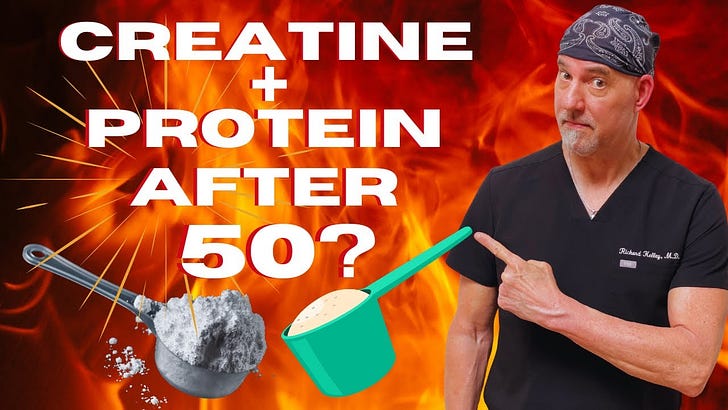
If longevity is “how long,” healthspan is “how capable.” That is why the muscle piece matters so much.
Creatine + Protein After 50 makes the point cleanly: creatine and protein are not trends. They are foundational supports for a body that is expected to keep working into later decades.
The older you get, the more expensive weakness becomes. Weakness turns small problems into big problems: a slip becomes a fall, a minor illness becomes months of deconditioning, and “I’ll get back to the gym next month” becomes “I used to train.”
Healthspan training is not about looking good in a T-shirt, although that is a pleasant side effect. It is about preserving these three outcomes:
Strength you can use (get up, carry, climb, stabilize)
Power you can access (not just slow grinding reps)
Capacity you can repeat (recovering well enough to do it again)
That is why protein intake and resistance training are not “fitness choices.” They are durability decisions.
Pillar 3: The Longevity Code, smarter stress not softer living
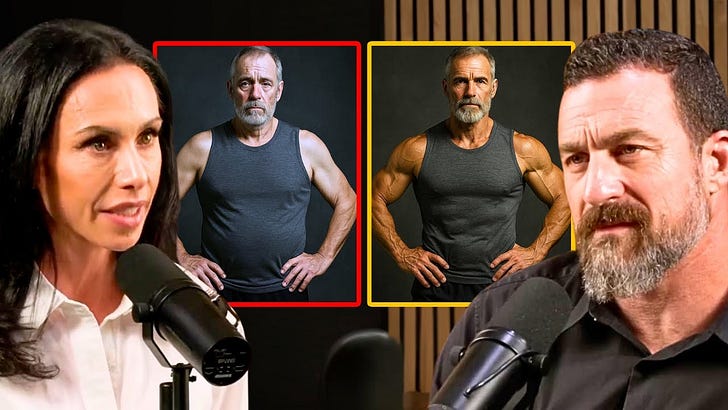
The trap for men over 50 is believing the solution is gentler living.
The Longevity Code Every Man Over 50 Needs to Know argues the opposite: the path forward is smarter stress, applied deliberately, in service of strength, independence, and clarity.
This is the difference between “exercise” and “training.”
Exercise is what you do when you feel like it.
Training is what you do because you understand the consequences of not doing it.
The longevity code is basically progressive overload, for the whole life. You keep asking the body to meet demands, then you recover, then you repeat. When the demands stop, the body adapts downward. It is not judging you, it is just saving energy.
So the blueprint is not “avoid stress.” It is “choose your stressors.” Strength training, cardio, mobility, and even uncomfortable conversations, all belong in the same bucket: chosen stress that protects you from unchosen stress later.
Pillar 4: Protect hormones by fixing the upstream

Hormones are where men get impatient.
Rethinking Testosterone Therapy for Better Health Outcomes sets the frame Tiger Health will keep repeating: if you are asking “Should I do TRT?” the honest answer is “maybe,” but first prove you are not trying to medicate a lifestyle problem.
This is not anti-TRT. It is pro-competence.
Testosterone is not a magic spell. It is a signal that sits downstream of sleep, body fat, stress load, alcohol, training quality, and metabolic health. And even when TRT is appropriate, it is not “add and win,” it is “add and manage,” with real tradeoffs (notably fertility suppression and other monitoring concerns).
So the healthspan move is a sequence:
Build strength and reduce visceral fat
Lock sleep and recovery
Remove the silent saboteurs (especially alcohol)
Then evaluate hormones, offering replacement where clinically appropriate
That order prevents you from paying for a medical solution to a behavioral problem.
Pillar 5: Upgrade recovery by removing the quiet poison
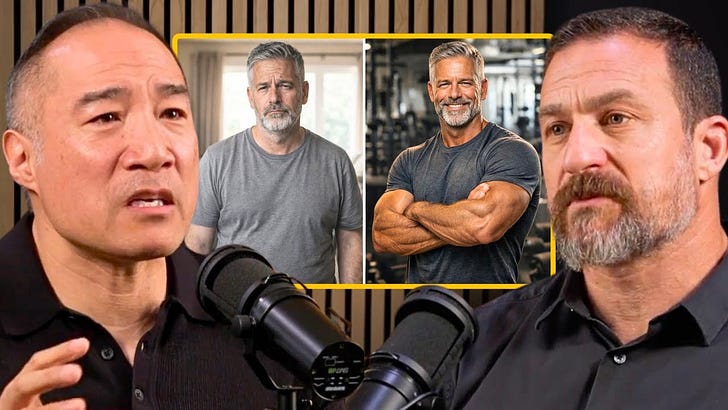
For many men, the single biggest recovery unlock is not a supplement, it is alcohol reduction, or removal.
Why Fit Men Over 40 Are Ditching Alcohol for Good frames the shift as pragmatic: alcohol once fit into life, for many it no longer does, and the gains extend beyond physiques into sleep quality, training consistency, mood stability, and clarity.
This matters because recovery is where healthspan is won. Most men have enough “knowledge.” The failure is not information, it is friction.
Alcohol adds friction everywhere:
It makes sleep feel like rest, while quietly degrading recovery quality
It blunts training consistency by stealing tomorrow’s energy
It destabilizes appetite and decision-making
It turns a week of “mostly good” habits into a week of “good on paper”
So the blueprint is not purity. It is alignment: remove the inputs that sabotage the outputs you claim considered.
How these five pieces fit together
If you zoom out, the Tiger Health Healthspan Blueprint is a simple loop:
Foundations create stability (sleep, nutrition adequacy, consistency)
Strength creates resilience (muscle as infrastructure, creatine and protein as supports)
Smarter stress creates adaptation (longevity code, deliberate training)
Recovery creates repeatability (remove alcohol, protect sleep)
Hormones become a managed lever (TRT as replacement when appropriate, not as a shortcut)
No hacks required. Just fewer self-inflicted setbacks, and more compounding.
Tiger Health Perspective
Tiger Health exists for men who want the second half to be stronger than the first, not softer. The blueprint is not complicated, but it is uncompromising: build strength, protect hormones by fixing upstream, and upgrade recovery by removing what quietly steals it. That is the Tiger Health Perspective