

Peptides: The Next Frontier in Elevated Male Transformation
Here’s to the peptide-powered evolution of men’s health – an era where growing older means only getting better.


High-achieving men over 40 are always on the hunt for an edge – a way to extend healthspan, build lean muscle, torch stubborn fat, boost brainpower, and rev up libido.
Enter peptides, the buzzy new tools in health optimization circles. Neuroscientist Andrew Huberman calls peptides a “new kind of wedge in between supplements and prescription pills,” and GQ dubbed them “the hottest thing on the fringes of fitness and anti-aging”. At Tiger Health, our ethos of “elevated male transformation” aligns with this cutting-edge approach: leveraging science-backed innovations like peptides to help men transcend the ordinary and achieve peak vitality. In this Substack-style deep dive, we’ll explore what peptides are, how they work, and the specific peptides showing promise for fat loss, muscle gain, hormone support, cognitive enhancement, libido, and recovery. We’ll look at real clinical data (yes, even randomized trials) behind these therapies, discuss safety and regulations in the U.S. and Asia (especially Thailand), and see why peptides are taking health optimization and concierge medicine by storm.
What Are Peptides and How Do They Work?
Peptides are essentially short chains of amino acids – miniature proteins that act as messengers in the body. If proteins are like full-length books, peptides are short stories that often carry important instructions. Many hormones and signaling molecules in our bodies are peptides: for example, vasopressin (which regulates water balance) and GLP-1 (which controls blood sugar and appetite) are natural peptides. Scientists have learned to synthesize peptides that can mimic or enhance these natural signals. By binding to specific receptors on cells, peptides can trigger targeted biological effects – telling your body to burn fat, repair tissue, secrete a hormone, or modulate brain chemistry.
Think of peptides as precision tools. Unlike blunt interventions (say, taking an oral steroid or stimulant), a peptide can nudge a particular pathway with more finesse. For instance, GLP-1 receptor agonists like semaglutide (Ozempic, Wegovy) are peptide drugs that mimic a gut hormone to reduce appetite. The result? Dramatic weight loss in clinical trials – about 15% body weight reduction on average with semaglutide, far outpacing placebo. Peptides occupy a unique middle ground: more potent and specific than most supplements, but often not yet mainstream medicines. That’s why they’ve become darlings of the biohacking and longevity community. Now, let’s zoom into specific goals and see which peptides are making waves.
Peptides for Fat Loss and Metabolic Health
Percentage of participants achieving ≥5%, ≥10%, and ≥15% body weight loss after 68 weeks of a GLP-1 peptide (semaglutide) vs placebo.
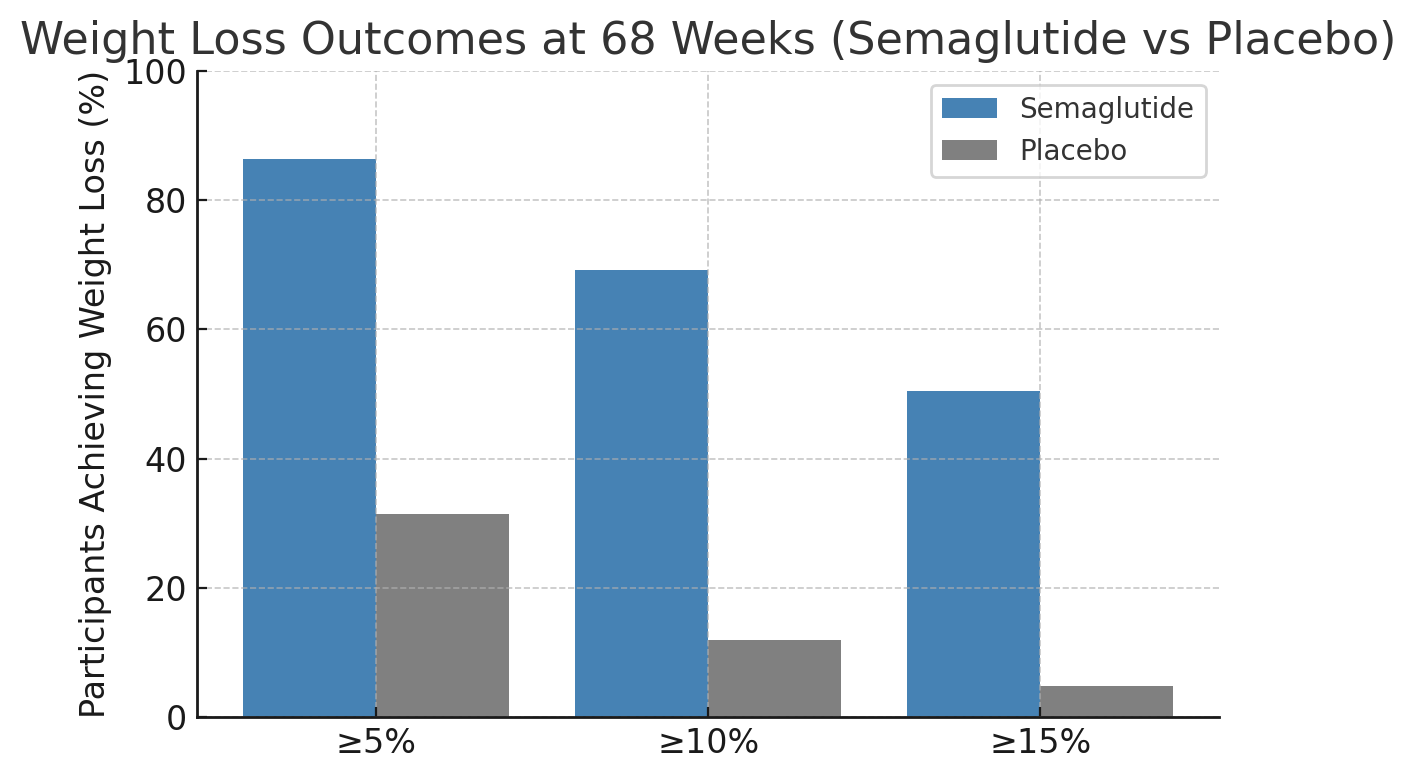
Shedding fat – especially that stubborn visceral belly fat – is a priority for many men over 40. Peptides are offering new avenues here. The poster child is GLP-1 analogs like semaglutide, originally developed for diabetes but now a game-changer in weight loss. In a 68-week randomized trial, semaglutide (a weekly peptide injection) helped 50.5% of patients lose at least 15% of their body weight, compared to just 4.9% with placebo. The average weight loss was about 15% of body weight on semaglutide vs ~2% with placebo – a staggering difference. These results underscore how a peptide targeting appetite signals can dramatically improve metabolic health. (No surprise semaglutide earned FDA approval for obesity and is making headlines as a “skinny jab”.)
Another fat-fighting peptide is Tesamorelin, a synthetic growth hormone–releasing hormone analog. Tesamorelin is FDA-approved to treat HIV-associated lipodystrophy, where it cuts down abdominal visceral fat. In clinical trials, 6 months of tesamorelin cut visceral fat by about 15% and improved metabolic markers. One Johns Hopkins review noted tesamorelin can trim 14–18% of abdominal fat and even lower triglycerides. While intended for HIV patients, some health optimization clinics use it off-label for middle-aged men struggling with belly fat.
What about AOD-9604? This peptide fragment of growth hormone was tested as an obesity treatment. A 12-week RCT found AOD-9604 users lost slightly more weight (~2.6 kg) than placebo (~0.8 kg). However, in a larger 24-week trial it didn’t show significant results, and development was halted. Still, AOD-9604 has gained an almost cult following as a “fat-burning peptide” sold in some anti-aging circles. The consensus: it’s relatively safe, but its fat-loss effect is modest at best.
In summary, the most credible peptide for fat loss right now is the GLP-1 class (semaglutide and cousins), given their robust RCT-backed efficacy. Others like tesamorelin show targeted fat reduction in specific contexts. These peptides are augmenting the toolkit for weight management – not as magic bullets (you’ll still need proper diet and lifestyle) but as powerful boosters for those struggling with obesity or metabolic slow-down in midlife.
Peptides for Muscle Gain and Strength
For men looking to build muscle or counteract age-related muscle loss (sarcopenia), several peptides are in the spotlight. Many fall under growth hormone secretagogues (GHS) – compounds that stimulate your pituitary to release more growth hormone (GH), which in turn raises IGF-1 levels. Sermorelin (synthetic GHRH) and Ipamorelin (a ghrelin-mimicking GHRP) are two examples. These can modestly boost GH/IGF-1, thereby enhancing muscle protein synthesis and recovery. In fact, sermorelin has been shown to increase IGF-1 levels and promote muscle growth in those with GH deficiency. It’s an FDA-approved therapy for GH-deficient individuals, though not officially for healthy adults.
Biohackers often combine CJC-1295 (another GHRH analog) with Ipamorelin – a stack aimed at maximizing GH pulses for muscle gain and fat loss. Anecdotally, users report better workout recovery, leaner muscle mass, and improved sleep. However, hard evidence in healthy humans is scarce. Early studies and athlete trials yield mixed results on whether these GH-boosting peptides translate to significant performance gains. For example, one GH secretagogue called ibutamoren (MK-677) did show a +1.1 kg increase in lean body mass in older adults over 12 months, but notably no improvement in muscle strength or function was seen. In other words, more muscle on paper doesn’t always mean more power in practice.
What about IGF-1 LR3 – the extended form of insulin-like growth factor-1 beloved by bodybuilders? While it’s logically anabolic, there are no human trials confirming its efficacy for muscle growth. Most evidence comes from cell or animal models. Using IGF-1 directly could also bypass your body’s safety checks, raising concern for unwanted side effects (like excessive organ growth or insulin resistance).
A promising area of research is myostatin inhibitors (to unblock muscle growth), including experimental peptides like follistatin. These have shown dramatic muscle gains in animal models, but human data are very limited. Still, as we look to the future, targeting myostatin or similar pathways with peptides might help older men preserve muscle mass.
Bottom line: Certain peptides can support muscle building – primarily by tweaking hormone levels (GH, IGF-1) or healing capacity – but they’re not magic. They work best alongside proper training and nutrition. Even proponents acknowledge that without hard training and protein, a peptide alone won’t turn a dad-bod into a Spartan physique overnight. That said, for a 50-year-old exec looking to reclaim some youthful muscle, a peptide protocol under medical guidance might provide a helpful boost in strength and lean mass, especially if there’s a true deficiency to correct.
Peptides for Hormone Support and Vitality
Hormones drive so many aspects of men’s health – energy, mood, libido, body composition. Rather than directly taking hormones (like testosterone or growth hormone), peptides can often nudge the body’s own hormone production. We’ve already touched on GH secretagogues for growth hormone support. But what about testosterone and other hormones?
One intriguing peptide in this realm is Kisspeptin-10. Kisspeptin is a natural hormone that triggers a cascade releasing luteinizing hormone (LH) and follicle-stimulating hormone (FSH) from the pituitary. Those, in turn, signal the testes to produce testosterone. Early research in men with low testosterone has shown that administering kisspeptin can increase LH secretion and boost testosterone levels. In one proof-of-concept study, kisspeptin-10 injections increased LH pulse frequency and amplitude in men with hypotestosteronemia, leading to higher testosterone output. This hints that kisspeptin-based therapy could someday be a tool to restore natural testosterone in men with certain forms of hypogonadism – acting almost like an “on switch” for the reproductive hormone axis.
Another peptide used for hormone support is good old hCG (human chorionic gonadotropin). Yes, hCG is a peptide hormone (a glycoprotein) – best known from fertility medicine – that mimics LH to stimulate testosterone production. Many men on testosterone replacement include hCG to keep their testes active, and some alternative clinics use hCG monotherapy to boost a man’s own T. It’s a reminder that “peptide therapy” isn’t all futuristic; some, like hCG, are well-established in medical practice.
On the thyroid/adrenal side, certain peptides are being explored to modulate those systems too, but evidence is scant. A peptide called Thymosin Alpha-1 (Tα1) isn’t a hormone per se, but it boosts the immune system and is used in some places for chronic infections or immune dysfunction – indirectly supporting overall vitality.
In short, peptides for hormone support aim to stimulate your body’s internal production rather than simply replacing hormones. This can be gentler and maintain normal feedback loops. But it’s also a balancing act; if overdone, stimulating hormones can cause the same side effects as high hormone levels. The potential is exciting – imagine raising your testosterone or growth hormone to youthful ranges naturally – but it requires medical supervision and realistic expectations.
Peptides for Cognitive Enhancement and Brain Health
Can a peptide make you sharper, more focused, or protect your brain as you age? It might sound like science fiction, but a few neuropeptides are emerging as nootropic or neuroprotective agents.
In Russia, Semax and Selank are two pioneering peptides used for cognitive and mood support. Selank is an anti-anxiety peptide, while Semax (an ACTH fragment) has nootropic properties. Early research and clinical use in Eastern Europe indicate Selank can improve cognitive function while reducing anxiety. Semax has been reported to enhance memory, focus, and even increase BDNF (brain-derived neurotrophic factor) levels, potentially aiding neuroplasticity. These peptides are typically given as nasal sprays and have been used in conditions ranging from stress to ADHD to stroke rehabilitation in their home country. While Western trials are limited, their growing popularity in wellness clinics speaks to their perceived benefits for mental clarity and resilience.
A more medically established example is Cerebrolysin, a unique mixture of brain-derived peptides. Cerebrolysin has been used (particularly in Europe and Asia) for stroke recovery and forms of dementia. Notably, randomized controlled trials in patients with vascular dementia and Alzheimer’s have shown significant cognitive improvements with Cerebrolysin compared to placebo. In one 24-week trial, patients on Cerebrolysin improved by 6.2 points more on a cognitive scale than those on placebo (a meaningful difference). These patients also maintained better activities of daily living and global function. Such data suggest that certain peptide formulations can promote brain repair and function – essentially acting as neurotrophic factors to support neuron health.
Additionally, peptide therapy is being explored for traumatic brain injury (to enhance recovery) and even for mood disorders. There’s buzz around peptides like DSIP (Delta Sleep-Inducing Peptide) for improving deep sleep and FGL (a peptide mimicking a neural cell adhesion molecule) for cognition, but these are largely experimental.
For the health-literate professional, the key takeaway is that peptides can cross into the brain and modulate neural pathways that standard supplements might not reach. They represent a new frontier in cognitive enhancement. However, you won’t find many of these in your local pharmacy – they’re typically obtained through specialty compounding pharmacies or overseas sources, and the long-term safety data is limited. Still, for those looking to maintain a sharp mind and protect against cognitive decline, peptides like Semax/Selank or Cerebrolysin offer a glimpse of what might be possible as this science evolves.
Peptides for Libido and Sexual Vitality
Sexual health is a big part of well-being, and peptides are making inroads here too. Perhaps the most notable is Bremelanotide, also known by the code PT-141. This peptide was originally derived from the tanning peptide Melanotan II when users noted an unexpected side effect – spontaneous arousal. Bremelanotide works via the melanocortin receptors in the brain, enhancing sexual desire and arousal independent of the vascular mechanism that drugs like Viagra use. In 2019 it gained FDA approval (brand name Vyleesi) for treating hypoactive sexual desire in premenopausal women. But what about men?
Off-label, PT-141 has shown impressive benefits for men with sexual dysfunction. In a recent study of men with erectile dysfunction or low libido, 91% of participants experienced improved sexual function when using bremelanotide, with many reporting easier erections, heightened arousal, and increased confidence. Notably, all men with baseline erectile issues achieved better erections, even those who didn’t respond to PDE5 inhibitor drugs. Men described effects lasting 18-24 hours, allowing for more spontaneity. This real-world clinic data aligns with earlier trials where melanocortin agonists produced erections even in men who weren’t responding to standard ED meds.
Beyond ED, peptides may also improve the overall sexual experience. PT-141 users often report a stronger mind-body sexual connection – essentially, feeling more turned on mentally and physically. It appears to tap into the brain’s sexual desire network in a way that traditional hormone or blood-flow treatments don’t.
Of course, side effects exist: facial flushing, nausea, and headache are common acute effects of PT-141. Some men also report short-term increases in blood pressure. These effects are transient and typically dose-dependent. Another quirk: because PT-141 is related to melanotan, it can cause skin tanning or even darkened moles in some users.
Another peptide worth mentioning is Oxytocin, the so-called “love hormone.” Oxytocin is a peptide hormone that can be given as a nasal spray to enhance emotional bonding, intimacy, and orgasm intensity. Some men use it (off-label) to potentially heighten the psychological aspect of sexual encounters or help with performance anxiety. It’s not arousing on its own, but it can amplify positive feelings during intimacy.
In summary, peptides for libido are shifting the paradigm from purely plumbing-focused solutions to ones that work on the brain’s arousal pathways. For men seeking renewed spark in the bedroom – whether it’s stronger erections or a revived libido – these peptide therapies could be a game changer when used responsibly. Always, it’s best to do this with medical guidance, as part of a holistic approach to sexual health (addressing hormones, psychology, and lifestyle factors too).
Peptides for Recovery and Healing
One of the most exciting domains for peptides is tissue repair and recovery. Imagine bouncing back faster from tough workouts, or even healing a stubborn injury that’s been nagging you for years. Some peptides appear to act like “repair accelerators”, tapping into our body’s healing processes.
BPC-157 is a standout here. Nicknamed the “Body Protection Compound,” this peptide was derived from a protein in stomach juice. BPC-157 has shown a laundry list of regenerative effects in animal studies – from healing tendons and ligaments, to mending intestines, bone fractures, and even nerve damage. It seems to work by upregulating growth factors, blood vessel formation (angiogenesis), and reducing inflammation in injured tissues. While most evidence comes from preclinical models, a human case series hinted at benefits: in one report, 7 out of 12 people with chronic knee pain got relief for over 6 months after a single BPC-157 injection to the knee. That’s pretty remarkable for an otherwise incurable chronic pain scenario, though it was not a placebo-controlled trial.
Athletes and biohackers rave anecdotally about BPC-157 helping them heal faster from muscle tears or tendonitis. It’s usually administered by subcutaneous injection near the injury or even taken orally (it’s one of the few peptides that may survive digestion). It’s important to note BPC-157 is not approved in the U.S. for any indication – in fact the FDA has flagged it as a substance of concern – but it remains available on the “gray market” due to high demand.
Another popular healing peptide is TB-500, which is a fragment of Thymosin Beta-4, a protein involved in wound healing. TB-500 has been used in racehorses to heal muscle and tendon injuries and is now finding its way to injured gym-goers. Like BPC, it’s thought to promote cell migration and new blood vessel growth in injured tissue. There’s less published research on TB-500 in humans, but it’s often stacked with BPC-157 for a one-two punch in injury recovery protocols.
Peptides are also used to speed surgical recoveries, improve joint health (some clinics inject BPC or similar into arthritic joints), and even for recovery from hard exercise (e.g. some report BPC-157 reduces DOMS and muscle soreness, allowing for quicker training turnaround).
It’s worth tempering the enthusiasm with a reality check: rigorous human trials are still needed. But the logic is sound – these peptides are basically telling the injured cells “heal faster and stronger.” For the weekend warrior with a rotator cuff tweak, or the 50-year-old runner with a lingering Achilles tendonitis, peptide therapy offered by sports medicine and regenerative clinics can be appealing when standard therapies have failed. And as the clinical evidence catches up, we may see these become mainstream in orthopedics. In fact, a 2025 systematic review concluded that while BPC-157 shows great promise for musculoskeletal injury healing, lack of human data and regulation means caution is warranted. Translation: peptides might help you heal like Wolverine, but use under expert guidance.
Safety, Side Effects, and What to Watch Out For
With all the excitement around peptides, it’s crucial to discuss safety. By their nature, peptides are specific in action, which can mean fewer side effects than generalized drugs – but this is not a guarantee. Here are key safety considerations:
Metabolic Effects: Growth hormone secretagogues can raise blood sugar slightly and reduce insulin sensitivity over time. In healthy folks this may not cause issues, but if you’re prediabetic or have metabolic syndrome, peptides that boost GH/IGF-1 could potentially worsen insulin resistance. Monitoring of fasting glucose or A1c is wise during long-term use.
Excess Growth and Tumor Concerns: Because many peptides stimulate growth pathways (e.g. IGF-1), there’s a theoretical risk of promoting unwanted cell growth. Sustained high IGF-1 has been linked to increased risk of certain cancers. As one expert noted, IGF-1 can “promote cellular proliferation and inhibit apoptosis,” which in predisposed individuals might encourage tumor development. There’s even the caution that some cancers have receptors for GHRH (the target of sermorelin), though paradoxically some data suggest sermorelin might have anti-tumor effects in certain contexts. The bottom line is we lack long-term safety data – using these peptides for decades is an unknown, so any personal or family history of cancer should be discussed with a doctor before starting.
Cardiovascular and Organ Stress: Too much GH or IGF-1 activity can lead to acromegaly-like symptoms – joint pain, edema, carpal tunnel, high blood pressure, and heart enlargement. Peptides that significantly raise GH/IGF (or high doses) could theoretically cause milder versions of these. Indeed, the FDA cited risks like cardiac hypertrophy and tachycardia when banning CJC-1295 from compounding pharmacies. Users should be alert to signs like swelling, tingling in fingers, or excessive fatigue which could indicate dose is too high.
Injection Site and Purity Issues: Most peptides are injectables (a few are nasal or oral). Frequent injections can cause local reactions – redness, lumps, or infection if not done carefully. Perhaps a bigger issue is product purity. The peptide market is rife with unregulated labs. Analysis of some “research peptides” found them impure or mislabeled. If you’re injecting something, you want pharma-grade quality. It’s critical to obtain peptides from a reputable source, ideally through a prescribing physician and compounding pharmacy that adheres to quality standards. Never inject something that you don’t trust the source of – the risk of contaminants (leading to allergic reactions or worse) is real.
Systemic Immune Reactions: Because peptides are foreign sequences, there’s some risk your immune system sees it as an invader. This is rare but cases of antibodies forming to peptides (rendering them ineffective or causing reactions) have been reported. If a peptide stops working abruptly or you develop unexplained inflammatory symptoms, this could be why.
Regulatory Ambiguity: Many peptides exist in a gray area of the law (more on this below). This means you are often self-experimenting to a degree, without the full safety oversight that FDA-approved meds undergo. It puts more onus on you and your healthcare provider to monitor progress and side effects closely.
Most short-term studies and anecdotal reports suggest that peptide therapies are well tolerated when properly used. For example, clinical trials of tesamorelin noted some joint aches and injection site irritation, but nothing too severe for most patients. Similarly, the main side effects with GLP-1 peptides are GI-related (nausea, etc.), which are manageable. Bremelanotide’s side effects like flushing and nausea subside within hours. And BPC-157 hasn’t shown organ toxicity in animal studies even at high doses. So, the risk profile appears favorable. Still, being an informed consumer is key. Start low on dosing, keep cycles moderate in length, and do periodic lab work (for hormones, glucose, IGF-1, etc.) if you’re on these peptides for extended periods. In essence: respect the potential of these molecules – they can do powerful things, which means things can go wrong if misused.
The Regulatory Landscape: U.S. vs Asia (Thailand in Focus)
It’s an interesting time for peptide therapy, legally speaking. In the United States, peptides exist in a patchwork of statuses:
A few peptides are fully FDA-approved drugs (e.g. semaglutide for obesity, teriparatide for osteoporosis, leuprolide for prostate issues, etc., though these are usually not thought of as “peptide therapy” in the wellness sense).
Many others are unapproved substances that cannot be marketed for human use. U.S. law says a new drug can’t be sold for humans without approval, which is why peptide vendors label their vials “for research use only”. It’s a legal fig leaf. Technically, it’s not illegal for you to use or possess these, but they can’t be legally sold for consumption. This hasn’t stopped a booming internet marketplace. As long as companies don’t make medical claims and buyers “promise” it’s for lab rats, the FDA tends to tolerate it – though they are cracking down more lately.
Compounding pharmacies (special pharmacies making custom meds) have been a legitimate source for certain peptides. A doctor could write a prescription for, say, sermorelin or BPC-157, and a compounding pharmacy in the U.S. would make it. However, in 2023 the FDA’s Pharmacy Compounding Advisory Committee took a hard look at peptides, citing safety uncertainties. They put several on a “do not compound” list as bulk drugs that pose significant risks. For example, CJC-1295, TB-500, and MK-677 were essentially banned from compounding due to concerns about cardiac side effects and lack of safety data. Ipamorelin was initially banned too after reports of an adverse event cluster, but after further review, it was removed from the ban list in late 2024 – an interesting reversal that suggests the FDA is trying to be evidence-driven. The upshot is that U.S. physicians have a narrower list of peptides they can legally prescribe through compounders now.
Enforcement: For end users, enforcement is usually low – peptides are not controlled substances, so it’s not like possessing a steroid or narcotic. The bigger risk is quality and being scammed, rather than getting arrested. However, if a peptide is expressly banned (like some are flagged by the FDA), importing it or selling it could get you in trouble. And athletes should beware: the World Anti-Doping Agency (WADA) prohibits all peptide hormones and growth factors for competitive sports.
Now, contrast this with Asia, especially Thailand. Thailand has gained a reputation as a hub for progressive anti-aging and regenerative therapies – peptides included. Are peptides legal in Thailand? By and large, yes – when used under proper medical supervision. Peptides are considered prescription substances that licensed Thai physicians can prescribe to patients as part of treatment. In other words, what might be an underground or quasi-legal therapy in the U.S. can be an above-board offering in Bangkok or Phuket. This more permissive regulatory environment has catalyzed a mini-boom in health optimization clinics across Thailand offering peptide therapy to locals and medical tourists alike.
At clinics in Bangkok, you might see peptide therapies advertised for everything from weight loss to brain health. The Thai FDA does oversee pharmaceuticals, but as of now peptides haven’t been subjected to heavy restriction there. It’s somewhat analogous to how Thailand handles other anti-aging treatments – there’s an openness to therapies that are newer or not yet FDA-approved in the West, provided they’re given by qualified doctors. As an example, a clinic might legally import peptides like BPC-157 or thymosin alpha-1 for patient use. Patients get them administered on-site under doctor care, or with a prescription to use at home. The concierge medicine model in Asia often includes comprehensive programs: a client might sign up for an “Executive Rejuvenation” package that includes peptides, NAD+ IVs, and hormone optimization, all legally supervised.
Why the difference? Partly, regulatory philosophy – countries vary in how quickly they adopt novel therapies. The U.S. requires lengthy approval processes, whereas places like Thailand can exercise clinical discretion sooner. There’s also a strong medical tourism industry in Thailand; offering the latest treatments attracts wellness travelers. Peptides fit right into the trend of biologically advanced therapies that wealthy or proactive patients seek out.
It’s not just Thailand. Malaysia and parts of the Middle East have clinics touting peptide treatments. However, note that some countries outright ban peptide imports too. (A list compiled by one site indicated Thailand, Malaysia, Indonesia, and the Philippines formally consider unapproved peptides illegal for personal import – though enforcement in Thailand’s private clinics paints a different picture.) Always check local rules if you are considering traveling with peptides or obtaining them abroad.
From Tiger Health’s perspective – rooted in Asia – we view the regulated, doctor-guided use of peptides as a key advantage. It means we can incorporate these cutting-edge tools in our programs responsibly, without operating in a legal gray zone. Men who come to us can benefit from therapies that might be hard to access back home in the States, under the care of clinicians who are experienced in their use. This is a big reason why peptides are gaining traction in concierge medicine: they offer next-level interventions for those who have the means and motivation to pursue them, and places like Thailand provide a fertile ground for safe experimentation and early adoption.
Why Peptides Are Gaining Traction in Health Optimization
From the above, you can probably sense a theme: peptides promise targeted, personalized enhancement – something very appealing to the high-performance, health-literate crowd. Here’s a quick recap of why peptides are on the rise, especially in boutique health clinics and concierge medicine:
Targeted Efficacy: Peptides let doctors address specific issues – want to lose visceral fat? Use a peptide that specifically signals fat breakdown (e.g. tesamorelin or GLP-1). Want faster injury healing? Pick a peptide that homes in on repair mechanisms (BPC-157, TB-500). This precision means you can potentially get benefits without as many off-target effects as broad-spectrum drugs.
Bridging a Gap: Many men in their 40s, 50s, 60s feel they’re not sick, but not at their peak either. Traditional medicine might say “your levels are fine, deal with it,” whereas peptide therapy offers an option to optimize and enhance function beyond the normal range. It’s an appealing middle path between doing nothing and going on full hormone replacement or strong pharmaceuticals.
Aging Population & Wellness Culture: As men age, maintaining muscle, leanness, cognition, and sexual function becomes harder. Peptides align perfectly with the goals of longevity and quality of life extension. They are increasingly featured in anti-aging conferences and integrative medicine protocols. The global wellness market’s growth has provided a receptive audience willing to invest in preventative and enhancement therapies.
Anecdotal Success and Biohacker Buzz: Let’s face it – part of the traction is word-of-mouth in high-achiever circles. When the CEO of your network swears that peptide XYZ “changed his life” or a famous podcaster extols BPC-157 healing his injury, others are intrigued. Early adopters (often found in Silicon Valley, finance, pro sports, etc.) have been touting peptides, creating a buzz that trickles down to mainstream awareness.
Concierge Medicine Model: Peptides are not one-size-fits-all. They require personalization (dosing, combination, monitoring), which fits the concierge healthcare approach where a doctor works closely with an informed patient on a bespoke regimen. Clinics in places like Thailand or Dubai package peptides into executive health programs, offering a white-glove experience. This model is profitable for clinics and attractive to patients who want more than the 15-minute doctor visit.
Asia’s Leadership: As discussed, regions like Asia are less hindered by red tape for these therapies. This means they can lead in refining protocols and gathering outcomes data. The more success stories and case series published from these clinics, the more legitimacy peptide therapy gains, fueling further adoption worldwide.
To illustrate, Tiger Health embraces peptides as part of our commitment to “elevated male transformation.” That means not just treating illness, but actively enhancing one’s physical and mental capacities. Peptides resonate with this ethos by providing tools to elevate performance, whether it’s a sharper mind in the boardroom, a stronger body in the gym, or revitalized vigor in the bedroom. They are one ingredient (alongside nutrition, training, mindset, and conventional medicine) in the recipe of comprehensive male optimization.
Conclusion: Integrating Peptides into Your Health Journey
Peptide therapy sits at the cutting edge of modern health optimization – a testament to how far science has come in decoding and directing the body’s biochemistry. We’ve seen that peptides can help reduce fat, build muscle, support hormones, boost brain function, enhance libido, and speed recovery. Crucially, we’ve backed these claims with evidence: from large obesity trials with GLP-1 analogs to RCTs in specialized populations (like tesamorelin in HIV or Cerebrolysin in dementia) and emerging human data on novel uses (like PT-141 for men’s sexual health and BPC-157 for injury recovery).
Yet, it’s equally clear that peptides aren’t magic potions or risk-free panaceas. They must be used knowledgeably: the “minimum effective dose” principle is wise, and periodic re-evaluation is a must. As with any intervention, foundation habits – exercise, nutrition, sleep, stress management – amplify or limit the results peptides can deliver. In other words, peptides can turn a good lifestyle into great results, but they won’t compensate for a poor lifestyle.
For men considering peptide therapy, a few parting tips:
Consult a Professional: Work with a clinician who has experience in peptide therapies. They can help select the right peptide(s) for your goals, obtain high-quality products, and monitor your progress (and lab markers) for safety.
Start Small, Measure, Adjust: Track what you’re trying to improve – be it waist circumference, muscle strength, cognitive testing, or sexual frequency. Introduce one peptide at a time so you know what’s doing what. Adjust doses based on response and side effects with your doc’s guidance.
Mind the Legalities: If you’re in the U.S., be aware which peptides you can legally get via prescription versus research supply. If traveling to Asia for treatment, do your due diligence on the clinic’s reputation. Never compromise on quality or sterility.
Stay Updated: The peptide landscape is evolving fast. New research, regulatory changes, and novel peptides are emerging every year. (For instance, keep an eye on tinzaparin analogs for fat loss, or mitochondrial peptides like MOTS-c in the anti-aging pipeline.) Subscribing to medical journals or trusted health newsletters can keep you informed so you can make the best decisions about these advanced therapies.
In embracing peptides, we stand at the frontier of what personalized medicine can achieve. This is about unlocking the body’s own communication signals to promote optimal function. For the motivated man over 40 who refuses to accept decline as an option, peptide therapy offers a tantalizing glimpse into a future of prolonged vitality and performance. It exemplifies the Tiger Health mantra of elevated transformation – using every tool at our disposal (old and new, Western and Eastern, natural and high-tech) to help you become the best version of yourself, at any age.