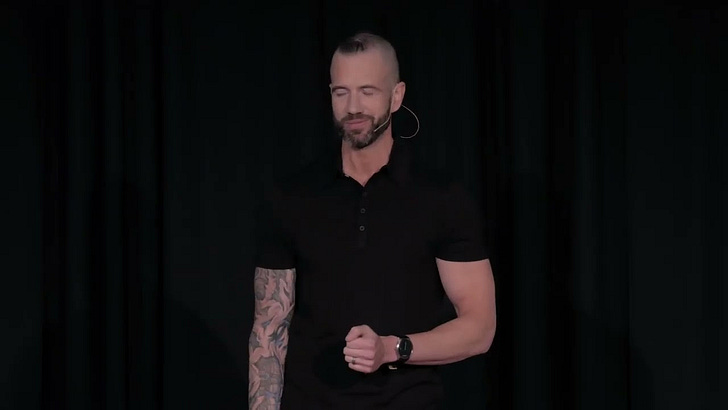
Muscle Matters: Why Strength Is the Real Currency of Healthspan
The message is simple but profound. Use it or lose it. Muscle matters. And for long-term health, strength is not a luxury. It is survival infrastructure.

Muscle as your primary metabolic engine
One of the most underappreciated facts in modern health is this: muscle is not just about strength or aesthetics. It is one of the most important organs in the body. As Dr Brendan Egan explains, even when you are sitting quietly, your muscles account for around 30 percent of your energy use. When you exercise, that figure rises to around 90 percent.
After you eat a meal, roughly 80 percent of the energy you consume is distributed to muscle tissue. Muscle is where carbohydrates and fats are processed, stored, and used. When muscle function declines, metabolic health declines with it. It should not surprise us that when muscle fails, disease follows.
This framing aligns directly with Tiger Health’s core philosophy. Muscle is not optional. It is foundational to performance, appearance, and healthspan.
The modern world is hostile to muscle
Two forces dominate modern life, and both quietly undermine muscle health. The first is automation. We sit. A lot. Even people who train regularly often spend 90 percent of their waking hours seated. You can do your morning workout and still spend the rest of the day inactive. Dr Egan describes this perfectly with the term “active couch potato”.
Sitting is not neutral. It is an independent risk factor for many chronic diseases. Even regular exercise does not fully offset prolonged inactivity. Muscles shrink when they are not used. They become less responsive, less powerful, and less metabolically active.
The second force is longevity driven by medication. We are living longer than ever, but not necessarily healthier. After 2050, the global population over 65 is projected to exceed those under 15 for the first time in human history. With longer life comes a sharp rise in chronic disease. Over 90 percent of adults over 65 live with at least one chronic condition.
And yet one of the most impactful age-related conditions is rarely discussed.

Sarcopenia: the silent epidemic
Sarcopenia is the age-related loss of muscle mass and strength. The word literally means “poverty of flesh”, but it also implies a poverty of power. After the age of 30, we lose roughly 3 to 8 percent of muscle mass every decade. That sounds manageable until you realise it compounds over time.
By the age of 65, around 20 percent of people have clinically significant sarcopenia. By 85, more than half do. The consequences are severe. Loss of strength leads to impaired balance, higher fall risk, fractures, frailty, loss of independence, and accelerated decline.
What makes this especially important for Tiger Health’s audience is that sarcopenia is not inevitable. Dr Egan shows striking imaging of a 74-year-old lifelong athlete whose muscle mass is dramatically preserved compared to a sedentary peer. Age alone is not the determining factor. Use is.
Muscle and survival are tightly linked
One of the most compelling data points in the talk compares mortality risk by strength level. Older adults are more likely to die than younger adults, which is expected. But within each age group, strength dramatically alters outcomes.
The strongest third of the population has roughly half the death rate of the weakest third. Strength is not just correlated with survival. It appears to be protective. Preserving muscle mass and strength meaningfully improves your odds of living longer.
This also explains why muscle loss accompanies so many diseases. Cancer, heart disease, diabetes, and neurodegenerative conditions often coincide with muscle wasting. Loss of muscle is not just a consequence of disease. It amplifies vulnerability.
Inactivity can erase a decade of muscle in weeks
One of the most alarming sections of the talk addresses immobilisation. Young, healthy adults who drop from 10,000 steps a day to 2,000 lose about 5 percent of their muscle mass in just 14 days. That is roughly the amount of muscle you would otherwise lose over an entire decade of ageing.
For older adults, the effect is even more dramatic. Ten days of bed rest in someone over 70 can result in a 10 percent loss of muscle mass. This is why hospitalisation and prolonged rest are so dangerous for ageing populations. Muscle loss accelerates rapidly when movement stops.
From a Tiger Health perspective, this reinforces a critical principle. Consistency matters more than intensity. Movement is not something you bank. It is something you must continually deposit.
Walking is not enough
Public health advice often defaults to walking. Thirty minutes a day. Five days a week. Better than nothing, but insufficient for preserving muscle. The body adapts specifically to the demands placed on it. If you want stronger muscles, you must challenge them with resistance.
Dr Egan points out that lifelong endurance-only exercise may actually predispose people to greater muscle loss compared to those who include strength training. The most effective approach for metabolic health combines aerobic and resistance training, not one or the other.
This directly supports Tiger Health’s emphasis on strength as a non-negotiable pillar of ageing well.
Progressive overload works at any age
One of the most hopeful messages in the talk is that muscle can respond to training even in very old age. In a study of adults over 85, just 12 weeks of targeted resistance training increased muscle cross-sectional area by around 44 percent and strength by about 50 percent.
That is not slowing ageing. That is partially reversing it.
This matters because it destroys the myth that it is “too late”. Muscle is plastic. It responds to stimulus at almost any age if the stimulus is appropriate and progressive.
You do not need a fancy gym
Another important insight is that resistance does not require expensive equipment. Bodyweight exercises performed consistently can meaningfully increase muscle mass in both younger and older adults.
In studies cited by Dr Egan, overweight young men and adults in their 60s both gained around 3 percent muscle mass using only bodyweight exercises three times per week. These movements closely resemble activities of daily living: standing up, lifting objects, stabilising the body.
Loss of independence often begins when people can no longer perform these basic movements. Training them directly preserves function, not just fitness.
Exercise should be prescribed like medicine
Perhaps the most Tiger Health-aligned statement in the talk is this: exercise should be prescribed like medicine. One size does not fit all. The right dose, type, and progression depend on the individual and the condition.
Thirty minutes of walking may be appropriate for one person and insufficient for another. For someone with age-related muscle loss, targeted resistance is not optional. It is therapeutic.
The message is simple but profound. Use it or lose it. Muscle matters. And for long-term health, strength is not a luxury. It is survival infrastructure.