

“How to Plan a Hair Transplant for Long-Term Results: Insights from Medical Experts”

Thailand has quietly become one of Asia’s most trusted destinations for hair transplants. With experienced physicians, advanced techniques, and streamlined treatment timelines, many international patients travel to Thailand specifically for the procedure.
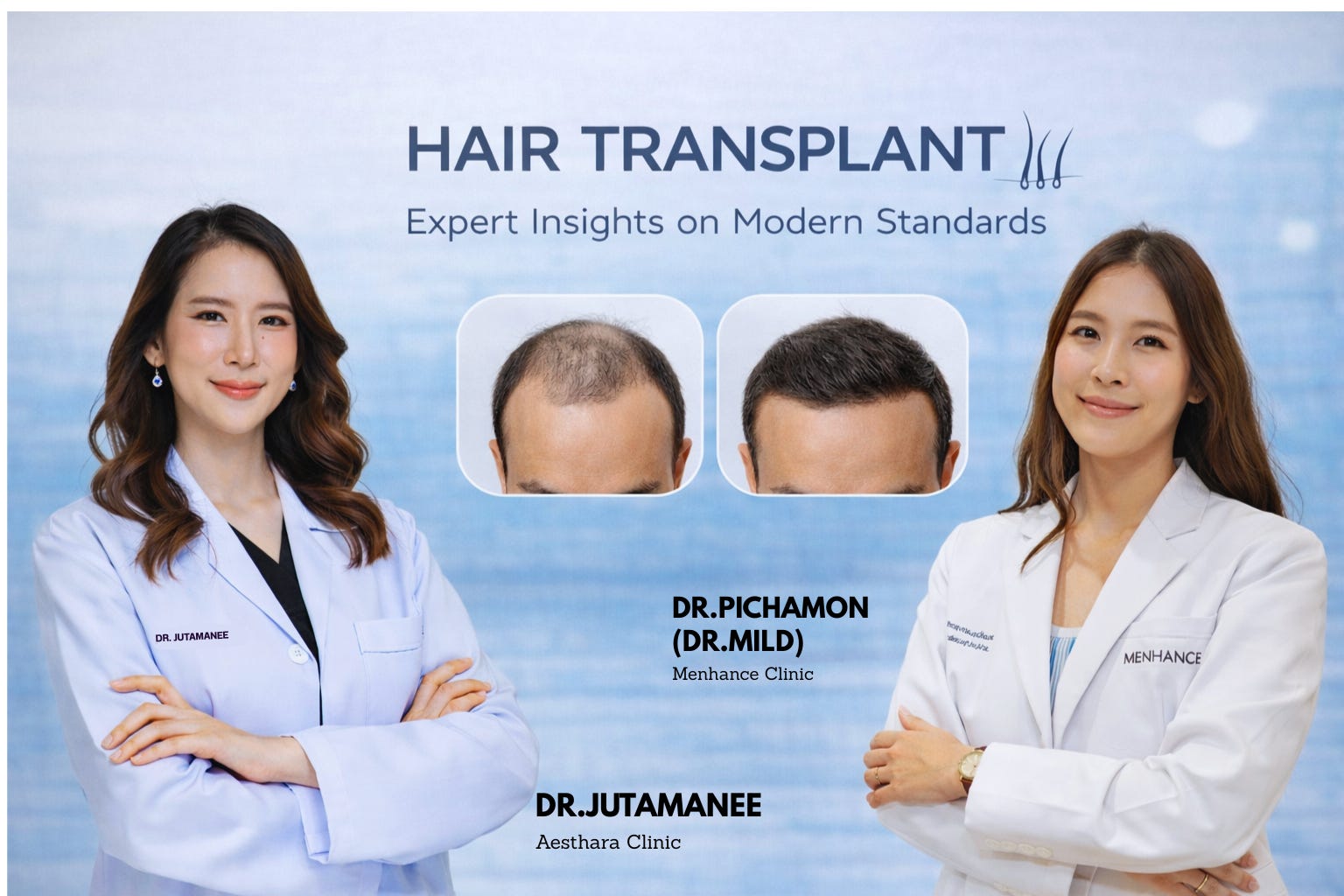
To better understand what patients can expect — from planning their trip to managing recovery — we spoke with two experienced hair restoration physicians:
Dr. Pichamon Siricharoensang (Dr. Mild) of Menhance Clinic
Dr. Jutamanee of Aesthara Clinic.
If a patient is visiting Thailand specifically for FUE, what is the typical timeline from consultation to flying home?
Dr.Mild (Menhance Clinic) :
Many of our patients travel to Thailand specifically for their hair transplant procedure. Fortunately, the treatment timeline is relatively short. In most cases, patients only need to stay approximately 2–3 days, after which they are generally able to fly home and resume their normal routine with minimal downtime.
To ensure everything proceeds smoothly, we usually conduct an online consultation prior to travel. During this stage, the doctor reviews the patient’s medical history, hair loss pattern, and donor hair availability. This allows us to develop a surgical plan in advance so the procedure can be performed efficiently once the patient arrives in Thailand.
Typical treatment timeline :
Day 1
In-person consultation
Detailed scalp evaluation and final hairline design
Hair transplant procedure
Day 2
Post-operative assessment
Professional hair wash and wound care
Low laser light therapy to support early recovery
Patients are generally comfortable flying home after Day 2.
Dr. Jutamanee (Aesthara Clinic) :
For patients who plan to travel, we generally recommend completing sightseeing or other activities before undergoing the hair transplant procedure. The treatment itself requires a structured timeline and adequate recovery time.
If the FUE (Follicular Unit Extraction) technique is used, the schedule typically follows a 3-day treatment timeline.
Day 1 – Procedure Day
The hair transplant procedure itself takes most of the day. It is a meticulous process requiring precision and several hours at the clinic.
Day 2 – Post-Operative Care
Patients return to the clinic for professional wound cleaning and a follow-up examination to ensure that the grafts are settling properly.
Day 3 – Rest and Recovery
This serves as a buffer day for rest. While patients do not need to remain in bed, they should avoid strenuous activities and excessive sun exposure.
For convenience, the consultation process is divided into two stages:
Initial Evaluation
Patients can begin by sending photos of their hair and scalp for a preliminary assessment. This allows our specialists to review the case and provide an initial recommendation remotely.
Final Confirmation
On the day of the procedure, a detailed face-to-face consultation is conducted to confirm all details, finalize the hairline design, and ensure everything is fully prepared before surgery begins.
Do you advise patients to stabilize hair loss (e.g., via finasteride, minoxidil) before surgery?
Dr. Mild (Menhance Clinic) :
In many cases, Yes.
Hair transplantation redistributes permanent follicles, but it does not stop the underlying progression of androgenetic alopecia. If hair loss is still active, stabilizing the condition beforehand helps protect existing hair and leads to better long-term results.
Depending on the patient’s age, stage of hair loss, and medical history, stabilization strategies may include:
Oral or topical medications such as finasteride or minoxidil
Hair PRP (Platelet-Rich Plasma) treatments to support follicular health
The objective is not simply to increase hair density, but to preserve native hair and prevent further thinning around the transplanted areas.
For younger patients especially, long-term planning is essential. Protecting existing hair ensures the transplant continues to look natural as the patient ages.
Every treatment plan, however, is personalized. Factors such as age, rate of hair loss progression, donor hair capacity, and patient preference all play an important role in determining whether medical therapy is recommended.
Dr. Jutamanee (Aesthara Clinic) :
Not every patient requires medication before or after a hair transplant. The necessity largely depends on the underlying cause of the hair loss.
For individuals who simply have a naturally high forehead without signs of genetic hair thinning, medication is typically not necessary. Standard hair-nourishing vitamins may be sufficient.
However, if the patient is experiencing androgenetic alopecia (hereditary hair loss), medication is often recommended to help maintain the existing hair.
In such cases, doctors may prescribe treatment in either oral or topical form, depending on the patient’s needs.
2 commonly used medications include:
Finasteride
This medication works by blocking the DHT hormone, which is responsible for shrinking hair follicles. It can reduce follicular miniaturization by approximately 70%, helping slow down the progression of hair loss.
Minoxidil
Minoxidil acts as a vasodilator, increasing blood flow to the scalp. Improved circulation helps deliver nutrients to hair follicles, which may lead to thicker and healthier hair growth.
What are the biggest myths about FUE you’d like to dispel?
Dr. Mild (Menhance Clinic) :
One of the most common misconceptions is that hair transplantation is completely scarless.
In reality, every extraction technique leaves tiny donor marks. When performed properly, these marks are extremely small and typically invisible in everyday life — but the term “scarless” is not medically accurate.
Another misconception is that more grafts automatically lead to better results.
Overharvesting grafts can permanently weaken the donor area. Successful hair transplantation is about careful design, proportion, and long-term planning — not simply the number of grafts transplanted.
Patients should also understand that no hair transplant guarantees a 100% success rate. Although graft survival is generally high, not every transplanted follicle will survive. Individual healing, hormonal factors, genetics, scalp health, and post-operative care all influence the final outcome.
Dr. Jutamanee (Aesthara Clinic) :
Many people believe that transplanted hair will never fall out.
In reality, most patients experience a temporary shedding phase between two weeks and three months after the procedure. This is a normal biological response as the transplanted follicles enter a resting phase.
After this stage, new hair gradually begins to grow again. These initial hairs are often thin and fine before they become thicker over time.
Patients should also understand that the final visible results of a hair transplant typically take between 12 and 18 months to fully develop.
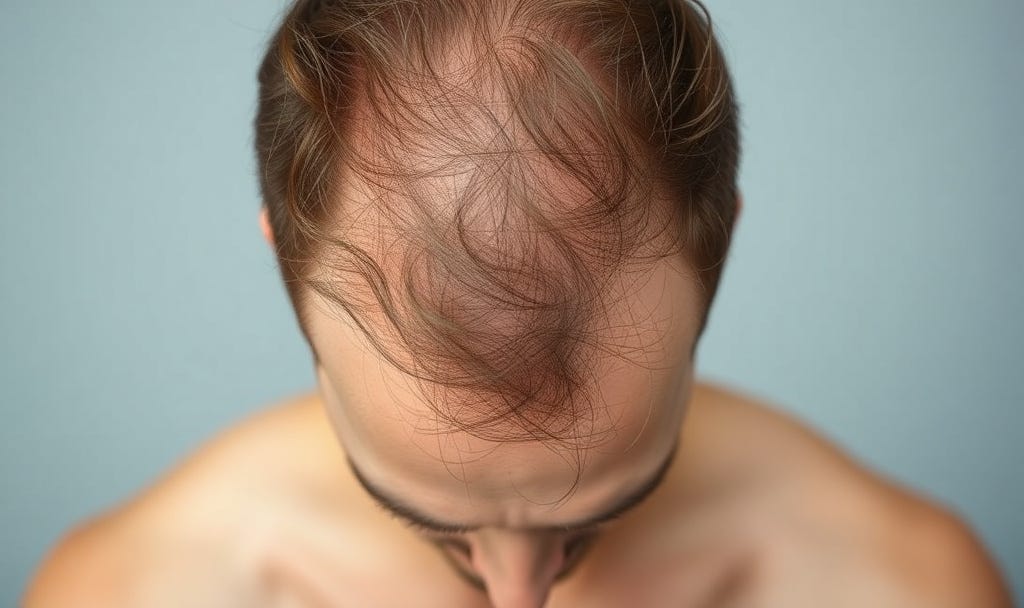
Shock loss following surgery can be challenging for patients, especially if they don't expect it. How do you manage patient expectations?
Dr. Mild (Menhance Clinic) :
Temporary shedding during the first 1–3 months is entirely normal. This occurs when transplanted hairs enter a resting phase before new growth begins.
New hair typically starts emerging around month 3 or 4, with gradual maturation continuing through 9 - 12 months.
Managing expectations starts before the procedure. Clear patient education significantly reduces anxiety after surgery. When patients understand the biological timeline of hair growth, the recovery process becomes predictable rather than stressful.
Supportive treatments such as PRP or low-level laser therapy may also be recommended in certain cases to support early recovery.
Dr. Jutamanee (Aesthara Clinic) :
Shock loss is a natural and temporary part of the hair transplant process.
During this period, supportive treatments such as PRP (Platelet-Rich Plasma) and LLLT (Low-Level Laser Therapy) may help stimulate hair regrowth. In addition, appropriate medications and nutritional support can further enhance recovery and support the health of both transplanted and existing hair.
What are your opinions on supportive treatments recommended online for shock loss and general post surgery recovery? e.g. PRP, Biotin, Red Light Therapy (LLLT), Exosomes, Microneedling, Stemcells. Which (if any) do you recommend to patients?
Dr. Mild (Menhance Clinic) :
After a hair transplant, the primary focus is to ensure proper healing and minimize temporary shock loss in surrounding native hair.
Several supportive treatments may help during recovery:
PRP therapy can improve the environment around transplanted grafts and support healing.
Biotin supplementation may benefit patients with confirmed deficiencies.
Low-level laser therapy (LLLT) can assist early scalp healing and improve circulation.
Microneedling may stimulate local blood flow and activate natural growth factors.
Emerging treatments such as exosome therapy and stem-cell-based approaches are also gaining attention as adjunctive therapies. Although research is still evolving, early evidence suggests potential benefits in tissue repair, inflammation control, and optimization of the scalp environment.
One example is Regenera Activa, an autologous stem cell treatment that utilizes a small sample of the patient’s own scalp tissue to obtain regenerative cells and growth factors. When performed alongside a transplant procedure, this approach may support surrounding follicles during recovery and potentially reduce shock loss.
Ultimately, however, sound surgical technique and proper patient education remain the most important factors for successful long-term outcomes.
Dr. Jutamanee (Aesthara Clinic) :
Post-operative care plays a crucial role in achieving optimal results.
Supportive treatments such as PRP, microneedling, extracted growth factors, and low-level laser therapy can help move hair follicles from the resting (telogen) phase back into the growth (anagen) phase. These therapies may also improve the overall quality and thickness of newly growing hair.
For patients with genetic hair loss, long-term medical therapy remains important. This helps ensure that transplanted hair continues to thrive while preventing existing natural hair from thinning over time.
About the Doctors
Dr. Pichamon Siricharoensang (Dr. Mild)
Dr. Pichamon Siricharoensang, widely known as Dr. Mild, is a physician with extensive expertise in hair restoration, aesthetic medicine, and men’s health.
She holds a Master’s degree in Clinical Dermatology from King’s College London and is an active member of the Thai Society of Cosmetic Dermatology and Surgery.
Having gained valuable clinical experience in the United Kingdom, Dr. Mild developed particular expertise in hair loss management, androgenetic alopecia, hair transplantation, and regenerative therapies. Her broader clinical practice also includes male sexual wellness and testosterone replacement therapy (TRT).
By combining international clinical experience with advanced medical technology, Dr. Mild focuses on delivering evidence-based, individualized treatments designed to achieve natural-looking and long-lasting results.
Contact: https://www.menhanceclinic.com/
Dr. Jutamanee Sudjai
Dr. Jutamanee Sudjai, M.D. is an aesthetic and hair transplantation physician and the founder of Aesthara Clinic in Chonburi, Thailand.
She received her Doctor of Medicine (MD) from China Medical University (International Program) and completed advanced training in Hair Restoration Medicine at Mae Fah Luang University. Dr. Jutamanee is also a member of professional organizations including the Asian Association of Hair Restoration Surgeons (AAHRS), FUE Asia, and the World FUE Institute (WFI).
With over 5 years of experience in hair transplantation, she has participated in numerous international workshops and scientific meetings, including the World Congress of ISHRS in Berlin, AAHRS scientific meetings, and advanced FUE and DHI hair transplant training programs across Asia.
Dr. Jutamanee specializes in FUE hair transplantation, aesthetic medicine, and regenerative treatments. Her expertise includes PRP therapy, microneedling, exosome therapy, and advanced facial aesthetic procedures, with a focus on achieving natural and long-lasting results.
Contact: https://www.aestharaclinic.com/