

Hair Transplant in Turkey for Men 35+: How to Plan for Natural, Long-Lasting Results
Hair transplant isn’t just restoration—it’s long-term strategy. Here’s what Istanbul experts want you to know.

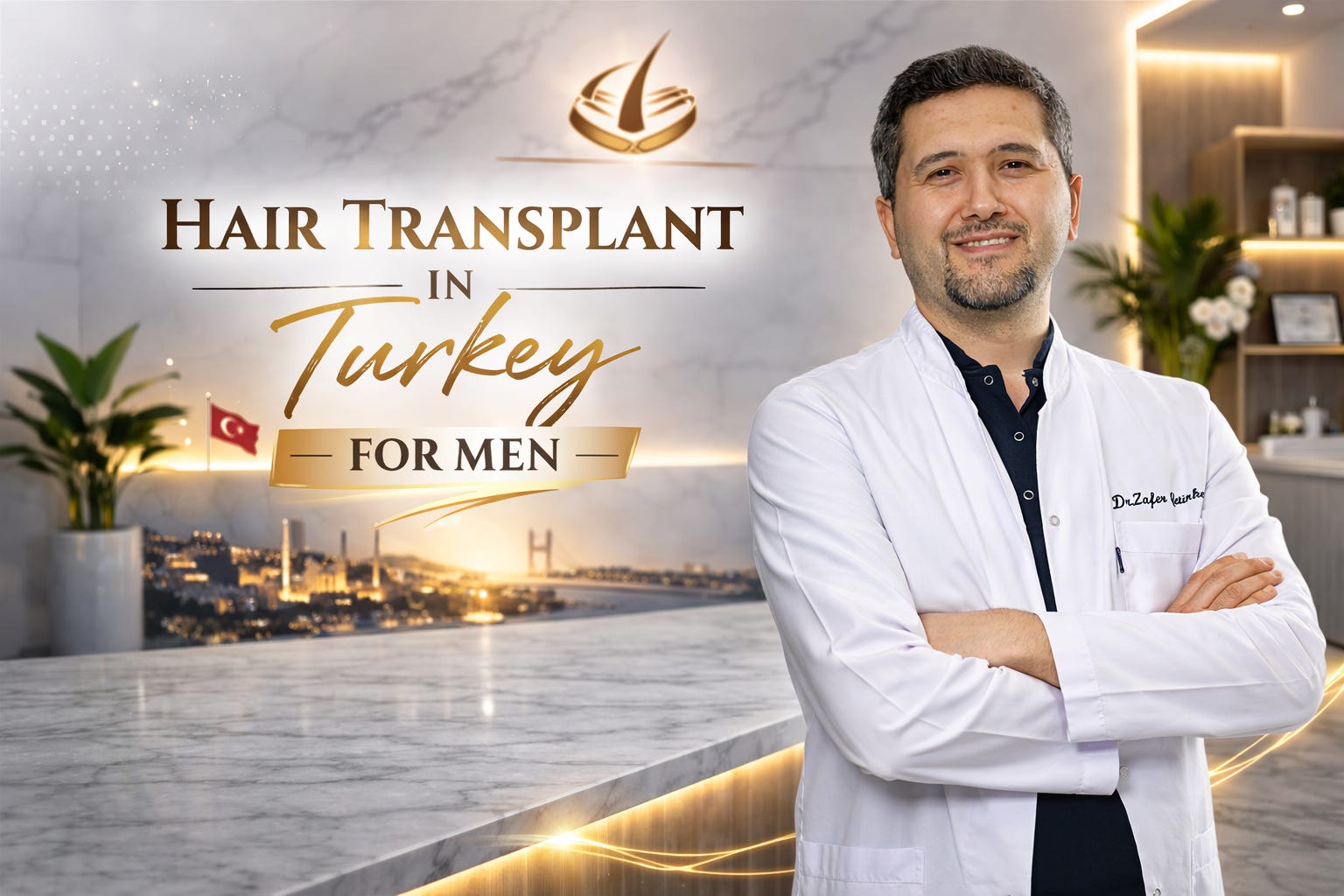
For many men, the decision to get a hair transplant comes at a turning point—when thinning hair starts to feel more permanent than temporary. It’s often seen as a straightforward solution: restore what’s been lost and move on.
But in reality, hair restoration is far more nuanced.
A well-executed transplant isn’t just about how your hair looks a few months after the procedure. It’s about how it will age with you—how it will hold up over the next 5, even 10 years. Without proper planning, even technically successful results can begin to look uneven as natural hair loss continues.
This is why a growing number of men aged 35 and above are choosing to travel to Turkey—not only for its global reputation in hair transplantation, but for the depth of medical experience and the emphasis on long-term treatment planning.
In this guide, we explore what truly matters before making the decision: from realistic timelines and technique selection to the often-overlooked factors that determine whether your results will stand the test of time.
Because when it comes to hair restoration, the best outcomes are never accidental—they’re carefully planned.
What to Expect When Traveling to Turkey for an FUE Hair Transplant
For international patients, getting a hair transplant in Turkey is surprisingly streamlined. In most cases, the journey begins before you even board a plane—with an online consultation where doctors review your photos and medical history to determine suitability and design a personalized treatment plan.
Once you arrive in Istanbul, the process typically unfolds over just a few days:
Day 1: Arrival and hotel check-in
Day 2: In-clinic consultation, scalp analysis, hairline design, and the FUE procedure
Day 3: Post-operative check and first professional hair wash
Day 4: Cleared to fly home
In total, most patients spend only 3–4 days in Turkey, making it a highly efficient option for medical travelers. After returning home, patients receive detailed aftercare guidance along with remote follow-up support to monitor progress.
Should You Treat Hair Loss Before a Transplant?
One of the most important—but often overlooked—steps in hair restoration is stabilizing ongoing hair loss before surgery.
In many cases, especially for younger patients or those experiencing progressive androgenetic alopecia, doctors recommend treatments such as finasteride and/or minoxidil. These medications can help slow down hair loss and preserve existing hair—an essential factor for achieving natural, long-term results.
Why does this matter? Because a hair transplant restores hair in specific areas—but it does not stop future hair loss in untreated regions.
For this reason, some patients may be advised to begin medical therapy several months prior to surgery. However, treatment plans are always tailored individually, taking into account age, hair loss pattern, medical history, and personal preferences.
FUE Hair Transplant: Debunking the Most Common Myths
Despite its growing popularity, FUE (Follicular Unit Extraction) is still surrounded by misconceptions that can lead to unrealistic expectations. Understanding what’s true-and what isn’t-is key to making informed decisions and achieving satisfying results.
Let’s break down some of the most common myths.
Myth #1: “FUE Leaves No Scars”
FUE is often described as a scar-free procedure—but that’s not entirely accurate.
While it is minimally invasive, FUE involves extracting individual hair follicles using tiny circular tools. This process leaves behind very small dot-like scars in the donor area.
The good news? These scars are typically barely noticeable, especially when the hair is kept short. But it’s important to understand—they do exist.
Myth #2: “FUE Is Better Than Other Methods”
Another widespread belief is that FUE is superior to techniques like DHI or other hair transplant methods.
In reality, no single technique is universally “better.”
FUE, DHI, and other approaches are simply different implantation methods, each with its own advantages.
The best choice depends on several individual factors, including:
The pattern and progression of hair loss
The quality of the donor area
Hair texture and characteristics
The patient’s goals and expectations
An experienced medical team will evaluate these elements carefully to determine the most suitable approach for achieving natural, long-lasting results.
Beyond FUE: Common Myths About Hair Transplants
Some misconceptions go beyond just FUE and apply to hair transplantation in general:
“You’ll See Instant Results”
Hair transplants don’t deliver immediate visible results. In fact, transplanted hairs often shed within the first few weeks after surgery—a normal part of the process.
New growth typically begins around 3 - 4 months, with full results developing over 9 - 12 months.
“You Can Transplant Unlimited Grafts”
The donor area—usually the back of the scalp—has a limited supply of healthy follicles.
This means that every graft must be used strategically. Proper planning is essential to maintain natural density while preserving the donor area for the future.
“A Hair Transplant Stops Hair Loss”
A transplant can restore hair to thinning or balding areas—but it does not stop ongoing hair loss.
That’s why many patients are advised to follow a long-term treatment plan, which may include medical therapies to maintain existing hair and protect the overall result.
Understanding Shock Loss: What Patients Should Know
One of the most important aspects of a successful hair transplant is setting realistic expectations—especially when it comes to shock loss.
Shock loss refers to the temporary shedding of existing hair around the transplant area due to surgical stress. While it can be concerning for patients who aren’t expecting it, it’s important to understand that:
It is usually temporary
Hair follicles typically recover and regrow over the following months
It is more likely to occur in areas where hair is already weak
By clearly explaining this process before surgery, patients are better prepared and less likely to panic during the early stages of recovery. Ongoing follow-up care also plays a key role in reassuring patients throughout the healing journey.
Post-Hair Transplant Treatments: What Actually Works—and What You Should Know
After a hair transplant, one of the most common questions patients ask is:
“Is there anything I can do to improve my results and make them last longer?”
Today, a wide range of supportive treatments are promoted online—from PRP to stem cells and exosomes. But the real question is: which ones truly work, and who are they right for?
PRP (Platelet-Rich Plasma): Stimulating Growth with Your Own Biology
PRP remains one of the most widely used supportive treatments. It involves drawing a small amount of the patient’s blood, isolating the platelet-rich plasma, and injecting it into the scalp.
The goal is to stimulate weakened follicles, improve the scalp environment, and reduce shedding in certain patients.
However, PRP is generally considered a supportive therapy rather than a standalone solution, and results can vary from person to person.
Stem Cell Therapy: Regenerative Potential at a Deeper Level
Stem Cell Therapy is one of the most promising advancements in hair restoration. It uses the patient’s own cells—typically derived from scalp tissue or fat—processed and reintroduced into areas of thinning.
Thanks to their regenerative capabilities, stem cells may help repair and reactivate weakened follicles, encouraging the growth of stronger, healthier hair over time.
Exosomes: A Fast-Growing Trend Still Under Evaluation
Exosomes are microscopic “messenger” particles that facilitate cell-to-cell communication and are increasingly used in regenerative treatments.
While they show exciting potential in hair restoration, it’s important to note that long-term, high-quality clinical evidence is still evolving. Compared to established treatments like minoxidil (and finasteride for men), exosomes are promising—but not yet fully proven.
Low-Level Laser Therapy (LLLT): Non-Invasive Scalp Support
LLLT uses specific wavelengths of light to stimulate cellular activity in the scalp. In the context of hair transplantation, it may help support healing and improve overall scalp condition, which can benefit both graft survival and surrounding hair quality.
That said, it should be viewed as a complementary treatment, not a primary solution, with outcomes varying between individuals.
Microneedling: Boosting Circulation and Growth Factors
Microneedling involves creating controlled micro-injuries in the scalp using fine needles, triggering natural healing responses and increasing blood flow.
While it can enhance scalp health and promote growth factors, it is not recommended during the early post-transplant healing phase. Once the scalp has fully recovered, it may be considered as an adjunct therapy to support hair density.
Enhancing Your Hair Transplant Results: What Truly Makes a Difference
While the success of a hair transplant begins in the operating room, what happens afterward is just as important.
At our clinic, we also recommend PRP (Platelet-Rich Plasma) and Stem Cell Therapy as supportive treatments for carefully selected patients. These advanced therapies can help stimulate the scalp, support the healing process, and create a healthier environment for hair growth—all of which contribute to stronger, more consistent results over time.
However, even the most advanced treatments cannot replace one crucial factor: proper aftercare.
Following post-operative instructions, using the right aftercare products, and maintaining consistency during the recovery phase are essential steps in ensuring that transplanted grafts survive and thrive. Patients who commit to this process often see more natural, longer-lasting outcomes.
Ultimately, achieving the best possible result is not about relying on a single solution. It’s about combining expert technique, supportive therapies, and disciplined aftercare into one cohesive, long-term strategy.
Because when these elements come together, they don’t just improve results—
they elevate them.
About the Doctor
Dr. Zafer Cetinkaya is a highly experienced hair transplant specialist and Surgical Team Lead, with expertise in FUE, DHI, and beard transplantation.
He graduated from Istanbul Faculty of Medicine in 2011 and later continued his medical training at Istanbul Medipol University. Early in his career, he gained broad clinical experience as an Emergency Room doctor before transitioning into aesthetic and restorative medicine.
Since 2014, Dr. Zafer has focused exclusively on hair transplantation and restoration, developing advanced expertise in modern techniques such as Sapphire FUE, ICE FUE, and Hybrid methods. To further enhance his skills, he completed certification in Mesotherapy and PRP at Istanbul Medipol University.
Committed to staying at the forefront of medical innovation, he regularly participates in international workshops and medical conferences, continuously refining his approach to deliver natural, long-lasting results tailored to each patient.
Contact : https://www.estenove.com/en/